
Search Massachusetts Court Records
Massachusetts court records are maintained by the Trial Court across seven court departments and 14 counties. You can search case dockets online through the MassCourts portal or visit a courthouse in person to find criminal, civil, probate, housing, and family court records across the state.
Massachusetts Court Records Overview
How to Search Massachusetts Court Records Online
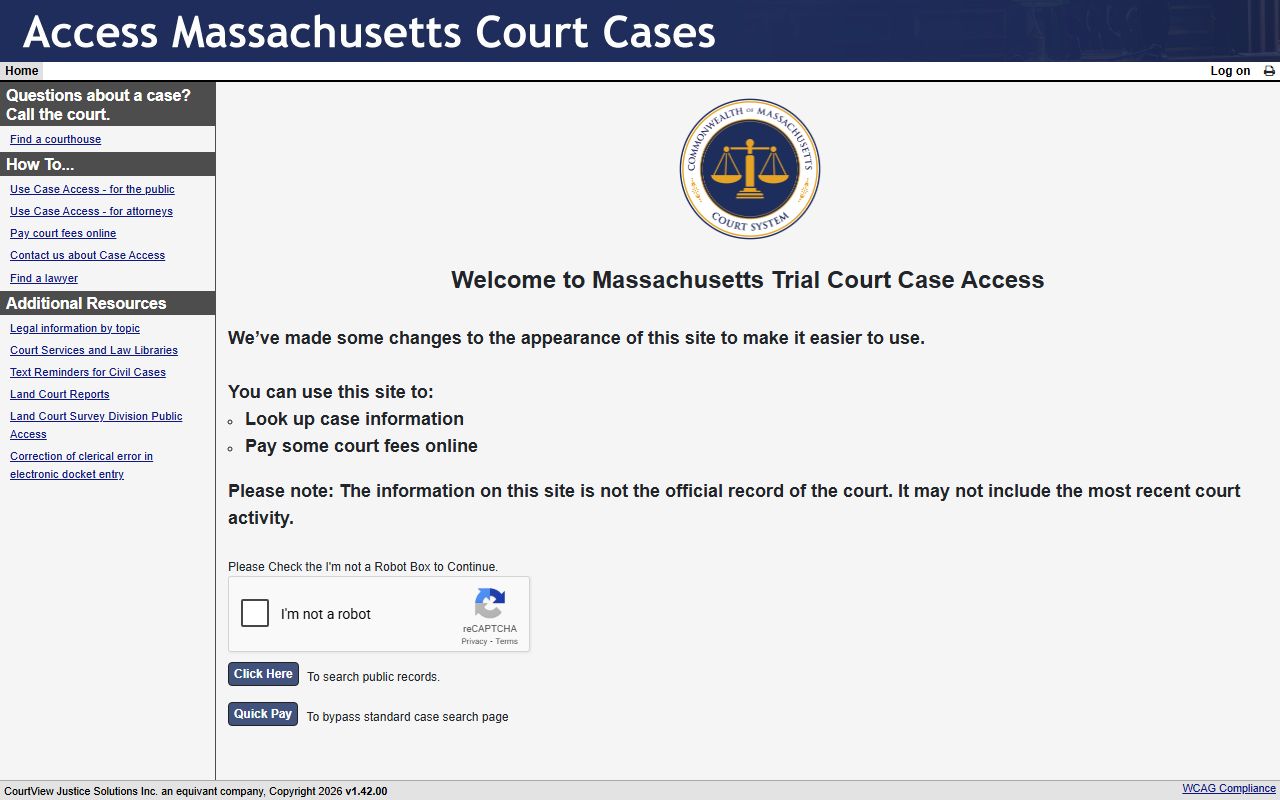
The main tool for searching Massachusetts court records is MassCourts, the state's free online case access system. It covers all seven Trial Court departments, including District Court, Superior Court, Probate and Family Court, Housing Court, and Boston Municipal Court. You can reach it any time at masscourts.org. The portal is free and does not need a login for public searches.
MassCourts lets you search four ways. You can look up a case by name, but only for civil cases. Criminal records cannot be searched by name through the public portal. You can also search by case number, case type within a 30-day date window, or ticket and citation number for traffic matters. The system shows party names, docket entries, case status, filing dates, and scheduled court dates. Document images are not available in most cases through the public portal. For full documents, you need to go to the courthouse in person.
Each case type has its own number format. District Court cases use a format like 1153CV000005. Superior Court cases look like 1473CV00213. Housing Court uses 08H77SP000890. Probate and Family Court dockets follow a pattern like PL14E0125QC. You must enter the case number exactly, including leading zeros and correct capitalization, or the search will fail.
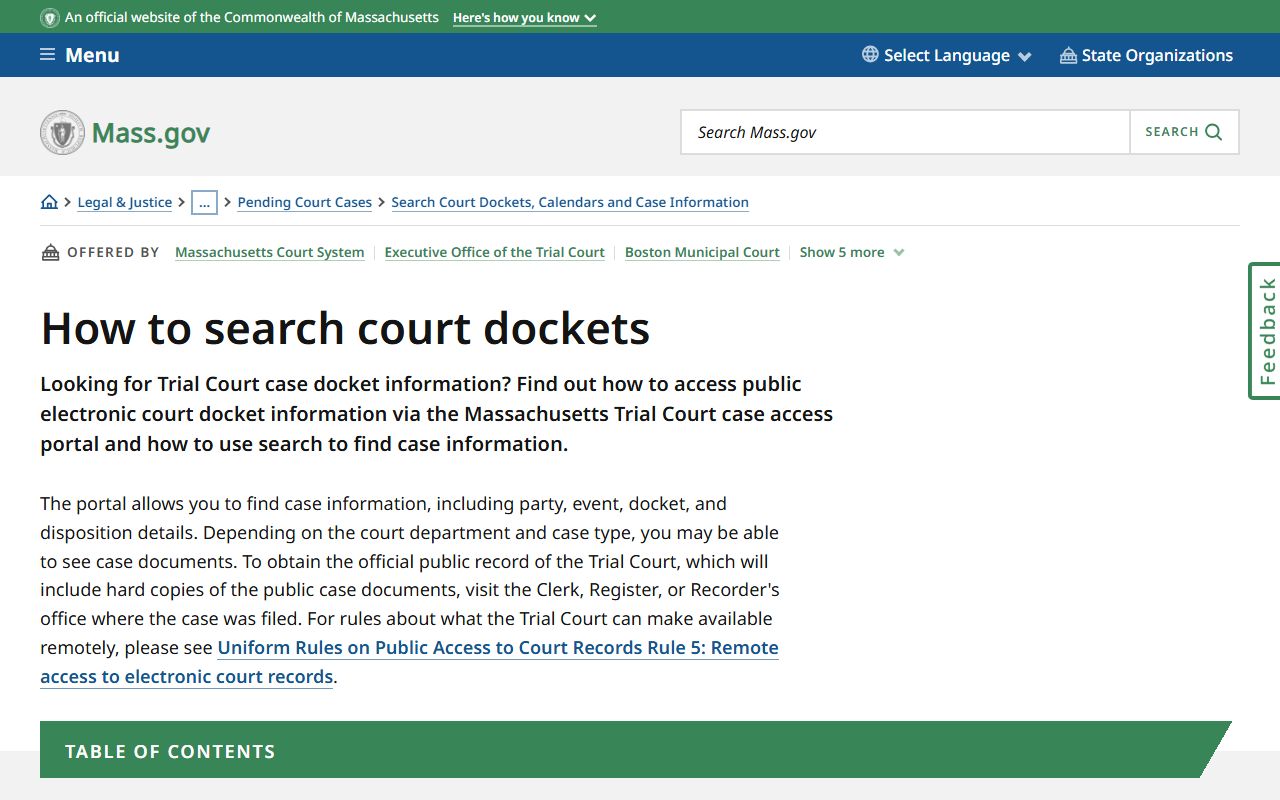
Public access terminals are available at every courthouse in Massachusetts. These give more complete access than the public web portal. You can also find them at County Registries of Deeds. There is no fee to use the kiosk, though court staff can set limits on time and volume. For detailed instructions on using MassCourts, see mass.gov's court docket search guide.
Note: Criminal records cannot be searched by name on the public MassCourts portal. You must provide the exact docket number, or request a CORI (Criminal Offender Record Information) check through a separate process.
Massachusetts Court System Structure
Massachusetts has a three-level court structure. At the top is the Supreme Judicial Court (SJC), the state's highest appellate court. Below it sits the Appeals Court, an intermediate appellate court. All cases begin in the Trial Court, which has seven departments.
The Massachusetts Trial Court handles the vast majority of cases. The Superior Court takes major civil actions over $50,000 and serious criminal cases including first-degree murder. District Courts, with 62 locations statewide, cover misdemeanors, felonies with up to five-year sentences, and civil cases under $50,000. Small claims up to $7,000 also go through District Court. The Boston Municipal Court serves Boston and Winthrop with a similar scope to District Court.
The Housing Court has six divisions and handles landlord-tenant disputes, evictions, and housing code enforcement cases. The Probate and Family Court has 14 divisions, one per county, and handles divorce, custody, child support, wills, estates, and guardianships. The Land Court operates statewide and deals with real estate title disputes, zoning appeals, and land registration cases. The Juvenile Court has 11 divisions and hears child abuse and neglect cases, delinquency matters, and adoptions. Juvenile court records are generally not public.
Each county in Massachusetts has its own set of courts tied to the Trial Court system. Suffolk County, which includes Boston, has the highest case volume in the state. Middlesex County is the most populous and has several courthouse locations. Smaller counties like Dukes and Nantucket operate compact courts that handle all case types in a single building.
Types of Massachusetts Court Records
Massachusetts court records cover a wide range of case types. Each type has its own set of documents and access rules. Knowing which court handled a case helps you find the right records faster.
Criminal court records include the complaint or indictment, arraignment documents, bail records, motion papers, plea agreements, and the final sentence. District Court handles misdemeanors and lower-level felonies. Superior Court handles serious felonies and cases going to trial. You can view civil criminal docket entries online through MassCourts using the case number, but you cannot search by name for criminal cases. Full files require an in-person visit or written request. CORI (Criminal Offender Record Information) checks are handled separately through the Criminal History Systems Board.
Civil case files contain the complaint, summons, answer, discovery documents, motions, and final judgment. District Court handles civil cases under $50,000 and small claims up to $7,000. Superior Court handles larger civil disputes. These records are searchable by name on MassCourts. Civil records are generally public unless a judge seals them.
Probate and Family Court records include divorce petitions, separation agreements, child custody orders, child support worksheets, wills, estate inventories, guardian appointments, and conservatorship documents. These courts keep records for 14 separate county divisions. Most probate records are public, though financial statements filed in divorce cases may have restricted access. Housing Court records cover evictions, code enforcement cases, and housing disputes. These are public records available through MassCourts or at the courthouse.
Note: Juvenile court records, adoption records, mental health commitment records, and sealed or expunged criminal records are not accessible to the general public.
Public Records Laws for Massachusetts Court Records
Massachusetts court records are largely public under state law. The right to inspect public records is grounded in M.G.L. c. 66, § 10, which gives any person the right to inspect and copy public records. Court records are generally considered public unless a specific statute or court order restricts access. You do not need to state a reason for your request.
Criminal record sealing is governed by M.G.L. c. 276, § 100A. This allows certain offenders to petition to seal their criminal records after a waiting period. Sealed records are no longer visible to the public through MassCourts. Expungement is a more complete removal of records, governed by M.G.L. c. 276, §§ 100E through 100U, which took effect in 2018 and applies to certain first-time offenses committed before age 21 or to cases that ended without conviction.
The Trial Court operates under M.G.L. c. 211B, which establishes the structure of the state court system and gives the Chief Justice authority over court operations. Probate and Family Court records access is governed partly by M.G.L. c. 215, which outlines the court's jurisdiction. Housing Court jurisdiction is set out in M.G.L. c. 185C. When courts impound records, they do so under specific rules of court or statute. This is more common in family cases involving children or sensitive financial information.
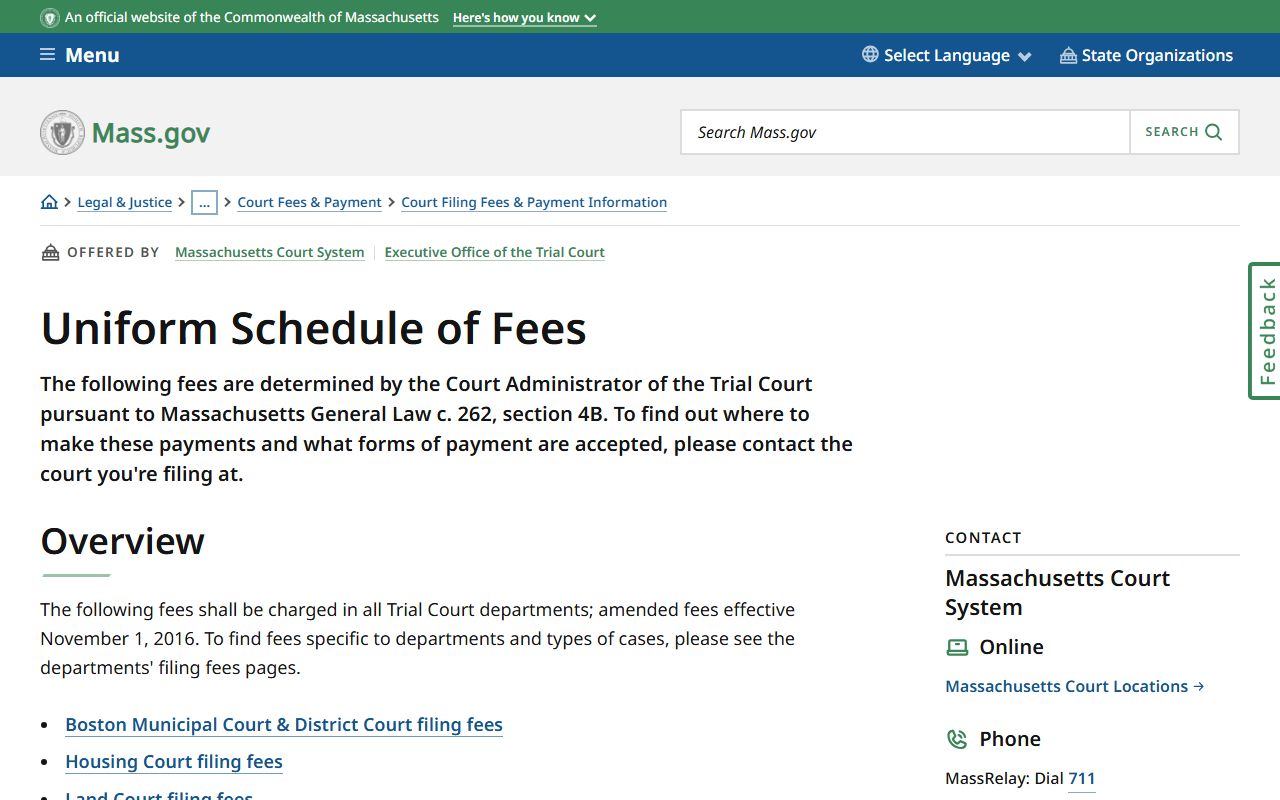
Court fees are set by the Trial Court's uniform fee schedule. You can find the full list at mass.gov's fee schedule page. Certified copies cost $2.50 per page for attested documents. Plain (unattested) copies cost $0.05 per page. Some specific documents, like divorce certificates, have flat fees of $20 each.
How to Get Massachusetts Court Record Copies
There are three ways to get copies of Massachusetts court records: online, in person, or by mail. Each method works for different situations. Online access through MassCourts is best for checking docket entries and case status. In-person visits work best when you need certified copies or want to review the full file. Mail requests are an option for people who cannot visit the courthouse.
To request copies in person, go to the clerk's office at the courthouse where the case was filed. Bring the case number or the names of the parties. Present valid photo identification. Staff can locate the file and make copies while you wait for simple requests. For archived or older records, you may need to come back on a later day. Processing times for complex requests or archived files run 3 to 10 business days. Payment for copies is accepted by cash, check, money order, or credit card depending on the court.
Mail requests require a written request that includes the case name, docket number, approximate filing date, names of parties, the specific documents you want, and your return address. Include a self-addressed stamped envelope. Payment must be sent with the request. Most courts accept attorney's checks, money orders, or bank certified checks. Make all payments payable to Commonwealth of Massachusetts. Do not send personal checks or cash through the mail. Mail requests take 7 to 14 business days for standard processing and longer for archived materials.
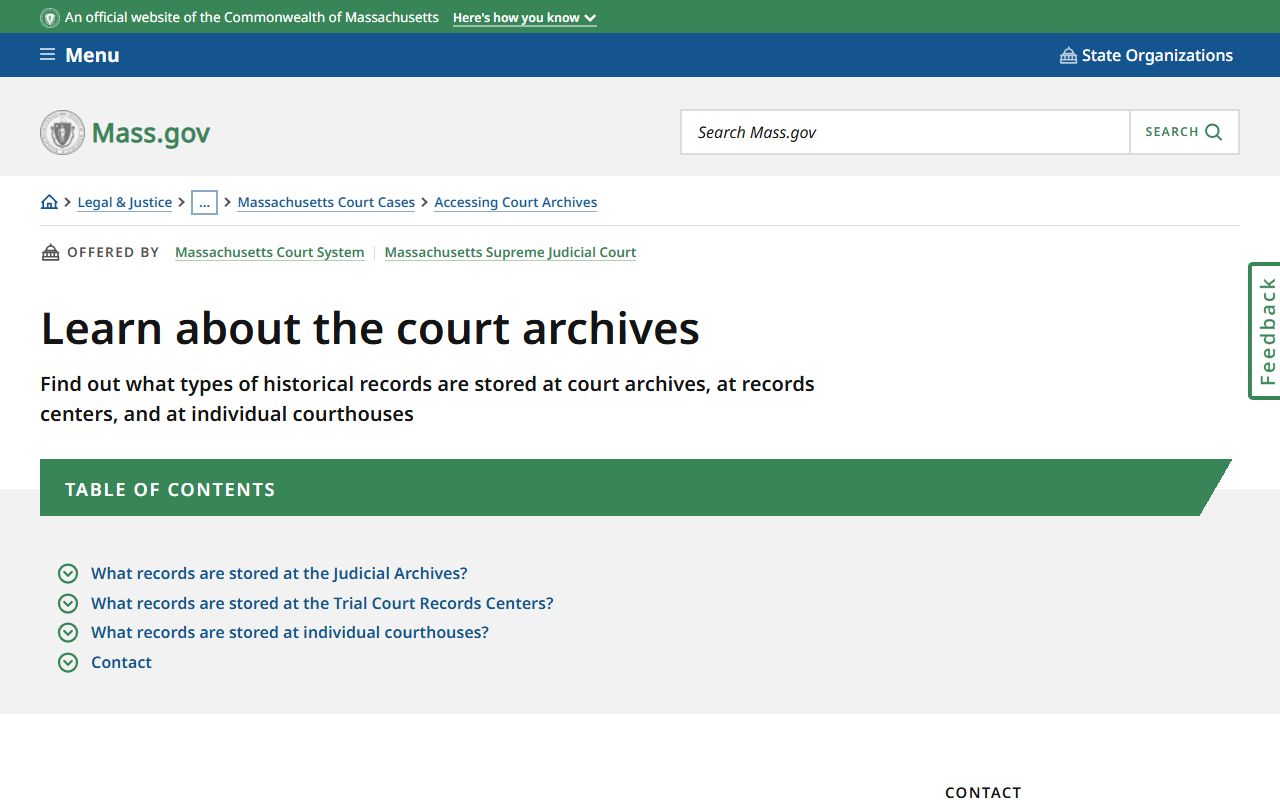
For very old records, the Massachusetts Archives Judicial Archives at Columbia Point in Boston holds permanent court records from 1629 through 1860. These include early probate records, pre-1906 naturalization records, and early judicial file papers. Access is by appointment with the Judicial Archivist. Many older records are also digitized on FamilySearch. More detail about accessing historic records is at mass.gov's court archives page.
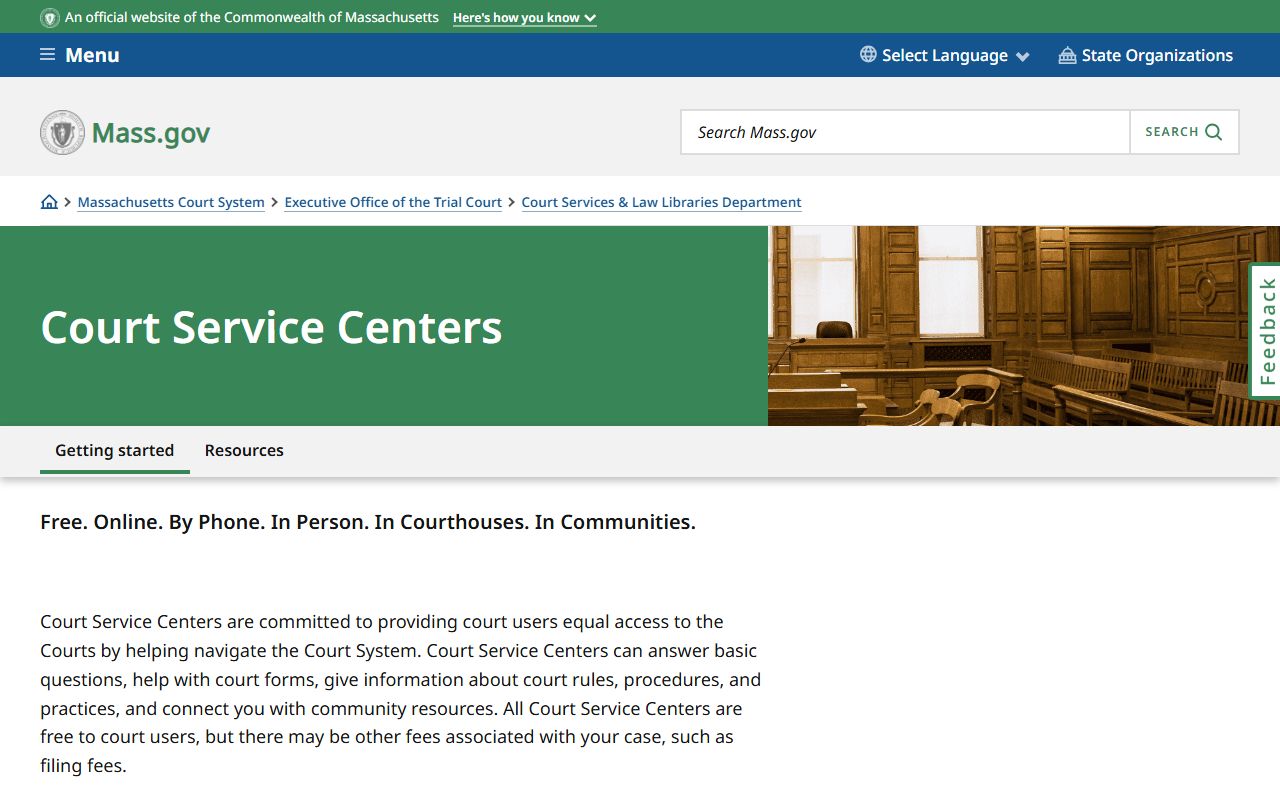
Court Service Centers offer free, walk-in help for self-represented people navigating the court system. Staff at these centers can help you find the right court, fill out forms, and understand procedures without giving legal advice. Find a location near you at mass.gov/court-service-centers.
Legal Help and Resources in Massachusetts
Several organizations in Massachusetts provide free or low-cost legal help for people who need it. Greater Boston Legal Services covers the Boston area and handles a range of legal matters including family law and housing. Community Legal Aid serves Central and Western Massachusetts. Call (978) 345-0500 or visit their site to ask about services. Northeast Legal Aid covers Essex County and surrounding areas. You can find legal aid organizations statewide at masslrf.org, the Massachusetts Legal Resource Finder.
MassLegalHelp at masslegalhelp.org offers self-help guides, plain-language explanations of court processes, and links to official forms. The site covers criminal records, family court, housing court, and more. The Massachusetts Law Reform Institute at mlri.org works on policy and publishes legal guides helpful for understanding court access. The Massachusetts Bar Association's lawyer referral service can connect you with a private attorney. Call (617) 654-0400 or toll-free at (866) 627-7577.
Note: Court Service Centers at courthouses provide free walk-in help for form completion and court navigation. No income requirement and no appointment needed at most locations.
Browse Massachusetts Court Records by County
Each county in Massachusetts has its own set of courts. Pick a county to find court locations, contact info, and resources for court records in that area.
Court Records in Major Massachusetts Cities
Residents of major cities access court records through their county's courthouse system. Pick a city to find local court info and resources for that area.